Product Description
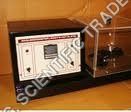
With desire to cement our reputation in the market, we are engaged in offering the finest quality Analgesiometer (Eddyas Hot Plate). Our offered equipment is manufactured using quality approved components and sophisticated technology by our dexterous professionals in tandem with international quality standards. It is extensively used to analyse an alternations of animal pain sensitivity induced of specific experimental context change as well as genetic manipulations. This equipment is well-known in the market due to its study construction, hassle free performance, long operational life, etc. Beside this, the Analgesiometer (Eddyas Hot Plate) provided by us are made available various models and technical specifications for our clients to chose from.
Features:
Reliable Pain Sensitivity Assays for Small AnimalsThe Eddy's Hot Plate Analgesiometer provides consistent thermal stimuli, facilitating accurate pain sensitivity assays in rats and mice. Its single plate capacity allows for up to six tests per cycle, promoting efficient data collection. The insulated cover and corrosion-resistant stainless steel plate enhance longevity and safety during laboratory use, making it ideal for both routine quality control and pharmacological investigations.
Effortless Operation with Advanced Safety FeaturesWith programmable digital timing and a user-friendly display, the instrument ensures precise data capture. Overheat protection and a robust, insulated housing maintain safe operation, reducing risks for animals and personnel. The device allows manual or automatic workflows (subject to model), supporting varied research protocols while meeting international laboratory standards.
Designed for Accuracy and ComplianceEngineered with a temperature control accuracy of 0.5C and timer accuracy of 0.1 seconds, this instrument provides reliable and reproducible results. The model conforms to pharmacological apparatus standards, supporting regulatory and scientific requirements for preclinical pain research and laboratory environments across India.
FAQ's of ANALGESIOMETER (Eddyas Hot Plate):
Q: How is the Eddy's Hot Plate Analgesiometer used for pain sensitivity testing in rodents?
A: Researchers place the rodent on the heated stainless steel plate and record the latency until the animal responds to the thermal stimulus (such as paw withdrawal or licking), using the programmable digital timer and display for precise measurement.
Q: What are the core components of the device, and why are they important?
A: The key components include a hot plate, digital timer, temperature controller, and thermal sensor. These elements ensure uniform heating, accurate timing, and reliable temperature measurement, crucial for reproducible results in laboratory assays.
Q: When should overheat protection and insulated covers be used during experiments?
A: Overheat protection is active throughout operation to maintain safe temperature levels. The insulated cover should be used whenever the device is operating to prevent accidental burns and protect both animals and researchers.
Q: Where are Eddy's Hot Plate Analgesiometers typically deployed?
A: These devices are commonly used in pharmacology, neuroscience, and laboratory research settings, particularly in universities, research institutes, and pharmaceutical testing facilities across India.
Q: What is the process for conducting multiple animal tests per cycle?
A: The single plate design accommodates up to six rodents in succession per cycle. Each animal is tested individually, with the timer reset between subjects to ensure accurate, separate pain response data collection.
Q: How does the device benefit research outcomes in laboratory environments?
A: The Analgesiometer's precise temperature and timing controls enhance reproducibility and reliability, contributing to high-quality data in pain studies. Its compliance with recognized standards supports scientific credibility and regulatory acceptance.
Q: What models and automation grades are available for the Eddy's Hot Plate Analgesiometer?
A: Depending on specific research requirements, the device is available in manual or automatic models, allowing laboratories and researchers to choose configurations best suited for their protocols.











 Send Inquiry

 Send Inquiry
 Send SMS