Product Description
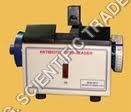
Backed by rich industry experience and in-depth market domain, we are involved in manufacturing, exporting and supplying the best quality Antibiotic Zone Reader that is extensively used for testing the zonal strength of different antibiotics. Manufactured under the direction of our skilled professionals using premium quality components and sophisticated technology, this equipment is made available in diverse technical specifications in order to meet the variegated requirements of the clients. Our offered equipment is highly admired in the market for its remarkable attributes given below. Also, we provide this Antibiotic Zone Reader at pocket friendly prices to the clients.
Features:
-
Strong construction
-
Low maintenance
-
Rust proof body
-
Superior functionality
Other details:
The antibiotic zone reader provides a rapid accurate method for determining the strength of antibiotic materials by measuring the diameter of an inhibited zone in Petri dish.
This zone reader measures the diameter of the inhibited zone to 0.02mm. with the range of 0 to 35mm. work on 230volts A.C. 50 C/S.
Precise Measurement TechnologyThe Antibiotic Zone Reader delivers sharp magnification and clear visual results using its 2x magnifier and uniform, diffused illumination. With advanced electronic measurement and manual petri-dish movement, researchers obtain high-accuracy readings directly on the LED display, making it ideal for microbiological analysis.
Easy Operation and CompatibilityEquipped for manual operation, the device allows seamless handling of petri dishes measuring between 75 mm to 100 mm. Its platform is compatible with both 90 mm and 100 mm dishes, supporting a wide range of laboratory applications and antibiotic sensitivity testing processes.
Built for Laboratory UseManufactured from powder-coated mild steel, the AMT-102 is engineered for longevity and ease of maintenance. Compact dimensions and approximate weight of 6-8 kg make it convenient to place in microbiology labs, ensuring standardized, repeatable measurements for infection research and pathogen studies.
FAQ's of ANTIBIOTIC ZONE READER:
Q: How does the ANTIBIOTIC ZONE READER measure zone inhibition in microbiology labs?
A: The reader uses a calibrated electronic measurement system paired with a 2x magnifier and an illuminated platform to deliver accurate digital measurements of antibiotic inhibition zones directly on petri dishes. Results are displayed on an LED digital display.
Q: What is the process for operating the manual petri-dish platform?
A: To use the manual platform, place a standard 90 mm or 100 mm petri dish on the platform. You manually move the dish to align the zone under the magnifier, then measure the inhibition zone using the clear digital readout.
Q: When should the ANTIBIOTIC ZONE READER be used in the laboratory workflow?
A: The device should be used after the incubation period when clear inhibition zones are visible on the agar plates. It is an essential step in antibiotic sensitivity testing and results documentation.
Q: Where can this instrument be used?
A: This zone reader is designed for microbiology laboratories in hospitals, research institutes, pharmaceutical companies, and educational establishments across India that require reliable antibiotic sensitivity testing.
Q: What are the usage benefits of the direct digital zone measurement feature?
A: Direct digital measurement ensures high precision, minimizes human error, and speeds up the workflow. The 0.2 mm accuracy and immediate LED display make result recording efficient and trustworthy.
Q: How does the built-in illumination help in zone viewing and measurement?
A: Uniform diffused light from the built-in lamp enhances visibility, providing sharp contrast and clarity for accurate identification and measurement of inhibition zones under the magnifying lens.
Q: What makes the ANTIBIOTIC ZONE READER suitable for intensive laboratory use?
A: Its robust powder-coated mild steel construction ensures durability, while its compatibility with standard petri dishes, accurate readings, and easy manual operation make it ideal for daily use in demanding laboratory environments.












 Send Inquiry

 Send Inquiry
 Send SMS