Product Description
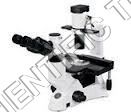
We integrate all our global resources while manufacturing and supplying an attractive range of Inverted Microscope. This type of microscope is used for high-contrast and low chromatic phase contrast observation. To make the microscope. our diligent workforce uses superior grade materials and components, procured from the trusted and reliable vendors. Our Inverted Microscope can perform detailed examination of internal structure of the cells. We offer our microscope to clients at the cost effective prices.
Features:
-
Coaxial coarse & fine adjustment
-
Vertical objective movement
-
Clear and bright fluorescent image
Specifications:
Infinity Optical System (IOS)
Siedentopf Trinocular Head inclined at 30, Interpupillary 48 - 75 mm
High - Point, Extra Wide Field Eyepiece EW10X/22
LWD Infinitive PLAN objectives : 4x/0.1 WD18mm, 40x/0.6 WD 2.6mm (Cover Glass 1.2mm)
Infinitive PLAN PHASE objectives : PH 10x/0.25 WD10mm, PH 20x/0.4 WD 5.1 mm
Quintuple Nose Piece
ELWD Condenser NA0.3, LWD72mm, (Without Condenser 150mm)
10X - 20X, 40X Phase Annulus Plate
Plain Stage 160x250mm, Glass Insert, Auxiliary Stage 70 x 180 mm
Coarse Stroke 37.7 mm per Rotation and Fine Stroke 0.2 mm per Rotation
Filter diameter 45 mm, Blue, Green & Ground Glass
Power supply (110V/220V)
Dust Cover
Advanced Inverted Microscopy for Precise AnalysisThis microscope leverages inverted microscopy theory, making it perfect for studying cell cultures, live organisms, and specimens contained in petri dishes or flasks. Its high-resolution digital camera enables easy documentation and sharing, while ergonomic design and anti-fungal optics offer comfort and longevity in laboratory environments.
Robust Structure and Ergonomic DesignConstructed with stainless steel and a stable, vibration-resistant base, this microscope guarantees durability and accuracy. The double-layer mechanical stage with transparent glass insert provides ample workspace, while the 45 inclined trinocular view head ensures comfortable, prolonged observation sessions.
FAQ's of Inverted Microscope:
Q: How does the inverted microscope improve specimen observation compared to standard upright models?
A: Inverted microscopy allows you to observe specimens from beneath, making it ideal for samples in petri dishes or flasks. This approach minimizes the need for sample preparation and reduces disturbance, resulting in clearer, more accurate observations, especially for living cells and tissue cultures.
Q: What is the process for capturing and exporting digital images with this microscope?
A: The built-in digital camera supports high-resolution capture (up to 5 MP) and provides USB 2.0 and HDMI output interfaces. Images can be saved in JPG or BMP format, and videos up to 1920 x 1080 resolution, allowing seamless export to computers or display devices for analysis and reporting.
Q: Where is this inverted microscope best utilized?
A: This microscope is designed for laboratory environments such as research institutes, clinical labs, and academic settings. Its heavy-duty frame and advanced focusing mechanisms ensure reliable use in settings requiring sustained precision and ergonomic comfort.
Q: When should I use the fine adjustment over the coarse adjustment?
A: Fine adjustment, with a precision of 0.002 mm, should be used for delicate focusing, especially at higher magnifications or when viewing minute cellular details. Coarse adjustment is suitable for initially locating the specimen or making broader focus changes.
Q: What are the main benefits of the anti-fungal treated optics?
A: Anti-fungal treated optics help maintain image quality and prevent degradation in humid or challenging laboratory conditions. This ensures longevity and consistent high-contrast imaging, reducing maintenance needs and safeguarding your investment.
Q: How do I clean and maintain the microscope to ensure optimal performance?
A: Regularly dust the frame and lenses using the included dust cover and appropriate cleaning materials. Remove the transparent stage plate for thorough cleaning, and ensure all moving parts are free from debris. Use recommended cleaning agents for optical components to preserve clarity and prevent damage.












 Send Inquiry

 Send Inquiry
 Send SMS