Product Description
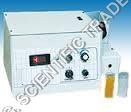
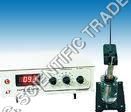
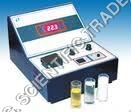
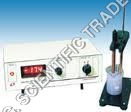
We are a remarkable entity, engaged in manufacturing, exporting and supplying a superior assortment of Photoflame Meter. The provided meter is used for inorganic chemical analysis for determining the concentration of certain metal ions such as sodium, potassium, lithium, calcium, and cesium. Offered meter is manufactured using excellent quality raw material and the latest technology. Moreover, this Photoflame Meter is available in different specification to the clients at affordable prices.
Features:
Efficient Sodium & Potassium DetectionThis meter precisely analyzes sodium and potassium levels in liquid samples. With high accuracy and a sensitivity down to 2 ppm for sodium and 1 ppm for potassium, it meets demanding laboratory standards while offering easy operation and direct digital readout. Researchers and technicians benefit from its streamlined workflow and dependable results.
Robust Design for Laboratory EnvironmentsDesigned from mild steel for enhanced durability, the Photoflame Meter performs within ambient temperatures ranging from 10C to 40C. Its compact size and weight (330 x 305 x 305 mm, approx. 5 kg) promote portability and easy integration into laboratory benches, making it suitable for diverse laboratory and research institutions.
User-Friendly TechnologyThe FP-202 features a semi-automatic system and an auto ignition mechanism, ensuring hassle-free setup and operation. The clear LED digital display facilitates straightforward data interpretation, letting users obtain immediate and accurate readings. Its easy maintenance and direct readout simplify routine laboratory work.
FAQ's of Photoflame Meter:
Q: How is the sample prepared for measurement with the Photoflame Meter FP-202?
A: To ensure accurate readings, you should prepare a liquid sample with a volume between 3-5 ml. The sample is then introduced to the photometer through the nebulizer for analysis of sodium and potassium concentrations.
Q: What steps are involved in operating the meter for sodium and potassium detection?
A: First, set up the LPG fuel gas at a working pressure of 0.5 kg/cm2 and activate the auto ignition system. Introduce the prepared sample into the burner, and use the LED digital display to observe direct readout values for sodium and potassium up to 100 ppm.
Q: When should the Photoflame Meter FP-202 be used in laboratory settings?
A: This photometer is ideal for laboratory applications when precise measurement of sodium and potassium is necessary, such as water analysis, clinical research, or quality control. Its accuracy and sensitivity support critical laboratory processes requiring quantitative ion determination.
Q: Where can this meter be purchased or supplied within India?
A: The FP-202 model is available from dealers, distributors, exporters, manufacturers, retailers, suppliers, traders, and wholesalers across India, supporting widespread laboratory and industrial requirements.
Q: What are the main benefits of using this photometer for quantitative analysis?
A: Key benefits include high accuracy (2%), sensitivity down to 1-2 ppm, direct LED digital display readout, reliable auto ignition, and easy operation, making it a dependable and efficient tool for laboratory professionals.
Q: How does the auto ignition system enhance laboratory safety and convenience?
A: The auto ignition system streamlines startup procedures and minimizes manual interventions, reducing the risk of handling LPG flame ignition and offering safer, faster device initiation during measurement cycles.
Q: What process does the meter follow to ensure precise results up to 100 ppm?
A: The meter utilizes a controlled burner, nebulizer, and detection system to atomize the sample and measure ion concentration. Built-in filters and the LED display help maintain linearity (1% up to 100 ppm) for dependable quantitative analysis.











 Send Inquiry

 Send Inquiry
 Send SMS