


Call Us
07971549544
Call Us
07971549544
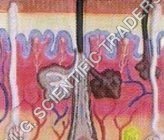
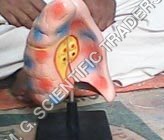
Our clients can avail from us premium quality Human Skin Model that is utilized in health centers laboratories hospitals to understand the structure of human skin and its main functions This model is manufactured at our hitech manufacturing unit under the observations of our dexterous team of professionals using the finest quality raw materials Offered model is made to pass through a series of tests conducted by our quality controllers on several parameters to ensure its durability Further we assure our clients the ontime delivery of the provided Human Skin Model at economical prices
Features
Error free information
Disposable training model
Neat graphic display
Further Details
The skin is the largest organ of the body with a total area of about 20 square feet The skin protects us from microbes and the elements helps regulate body temperature and permits the sensations of touch heat and cold
Skin has three layers
The epidermis the outermost layer of skin provides a waterproof barrier and creates our skin tone
The dermis beneath the epidermis contains tough connective tissue hair follicles and sweat glands
The deeper subcutaneous tissue hypodermis is made of fat and connective tissue
The skins color is created by special cells called melanocytes which produce the pigment melanin Melanocytes are located in the epidermis
Comprehensive Layered Detailing
Each layerepidermis dermis and subcutaneous tissueis presented in high detail and color enabling clear visualization of human skin structure The models careful handpainting and realistic surface make it an exceptional educational resource for demonstrating both macro and micro features
Built for Safety and Longevity
Made with robust plastic and carbon fiber this skin model is specifically designed to withstand exposure to typical laboratory chemicals without degradation Its materials and construction ensure longterm durability and consistent performance even under frequent use in academic and training settings
UserFriendly and Practical Design
The standalone base eliminates installation hassle allowing quick setup for demonstrations or classes Cleaning is straightforward needing only a damp cloth ensuring the model remains hygienic after repeated handling Its portability and moderate weight approx 300500g also make storage and transport easy
FAQs of Human Skin Model
Q How is the Human Skin Model used in anatomy classes and laboratory training
A The model serves as a visual and tactile aid for students and instructors making it easier to explain and understand the various layers of human skin Its enlarged clearly labeled sections help users grasp detailed anatomical features during demonstrations or practical sessions
Q What materials are used in the construction of the skin model and are they safe for lab environments
A It is made from highquality plastic and carbon fiber which are resistant to most common laboratory chemicals ensuring safety and durability during regular classroom or lab use
Q When should the model be cleaned and what is the proper cleaning method
A The model should be cleaned after each use especially in shared environments Simply wipe the surface with a damp cloth to maintain hygiene harsh chemicals or solvents should be avoided to preserve the models finish
Q Where can the Human Skin Model be displayed or mounted for demonstrations
A Thanks to its freestanding base the model can be set up on any flat laboratory bench classroom desk or presentation table making it flexible and convenient for use wherever instructional sessions are held
Q What benefits does the model offer over traditional flat anatomical charts
A Unlike twodimensional charts this threedimensional handpainted model offers a more engaging and realistic representation of skin anatomy supporting more effective learning by allowing handson exploration
Q Is the models detailing accurate enough for advanced laboratory training
A Yes the HS01 model is highly accurate and features handpainted multicolor detailing of all main skin layers making it suitable for higher education training and professional laboratory instruction

Price:


|




 Send Inquiry

 Send Inquiry
 Send SMS