Product Description
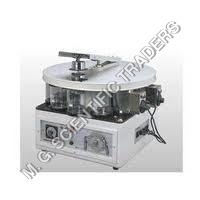
Pioneer in the industry, we are engaged in offering an impeccable range of Automatic Tissue Processor. Only high quality raw material is used while manufacturing our provided tissue processor, for increased compliance with international market standards of quality. It is widely used for automatic processing animal and human tissues. Apart from this, our offered range of Automatic Tissue Processor is available in different specifications, as per precise needs of our clients and at highly competitive prices.
Features:
Details:
Timing & stage sequence, Wax bath temperature safety system etc. are all controlled/operated by feather touch key board with Digital Display. The entire unit looks very attractive with aesthetic appeal. The data is retained In case of power failure. Front panel comprises of the key board, digital display, control switch. The PID temperature controller have been used for controlling the wax bath temperature.
Technical Data: The 12 stage timing sequence may be programmed for each stage for duration between 1 minute to 9 hrs. 59 minute, in steps of I minute. Delay Time: Delay time can be programmed up to hours and Will be sequenced with main control.
Wax Bath Safety Control: Wax Bath PID temperature controller gives signal if temperature is not between 500 to 650C. Safety System will function at 10th, 11 th & 12th position and will stop the main unit in stage 9 onward till the set temperature is attained in the wax bath.
Basket Rotor: Slowly rotating 2 basket rotors are also operated through the microprocessor, The unit is supplied complete with 2 Nos. S.S. Basket Rotors, 2 Nos. S.S. Baskets, 24 Nos. S , S. Tissue Capsules, 10 Nos. S.S. beakers without lip, 2 Nos. S.S. Wax Baths (Special designed for use with PID temperature controller). Suitable to work on 220 V, single phase, 50 Hz, AC supply. Cap. I litre, 2 liters.
Advanced Programmability and SafetyThis tissue processor allows full control over processing schedules with user-programmable cycles of up to 24 hours and digital timing accuracy. With integrated safety mechanisms like auto cut-off, over-temperature protection, and power failure memory, users experience assured protection and glitch-free operation during extended runs.
Robust Construction and Easy MobilityBuilt from mild steel, stainless steel, and high borosilicate glass, the processor meets demanding laboratory requirements. Power-coated with an epoxy finish for enhanced durability, its compact design and smooth castor wheels facilitate effortless relocation within clinical or hospital environments.
Efficient Workflow for HistopathologyAccommodating up to 80 cassettes across 12 reagent jars and 2 wax baths, this fully automatic tissue processor supports high throughput applications in clinical and diagnostic histopathology labs. Delay start options, audible alarms, and digital LCDs streamline workflow and minimize manual intervention.
FAQ's of Micro Processor Based Automatic Tissue Processor:
Q: How does the Micro Processor Based Automatic Tissue Processor improve tissue processing efficiency?
A: This device automates tissue processing with fully programmable cycles, digital timing, and capacity for up to 80 cassettes, significantly speeding up workflow and reducing the need for manual handling.
Q: What safety features are included in this tissue processor?
A: The processor is equipped with auto cut-off to prevent overheating, power failure memory for cycle resumption after interruptions, and over-temperature protection to ensure secure operation during extended processes.
Q: When should the programmable delay start feature be used?
A: The delay start is ideal when you want batches to finish at specific times, such as overnight processing or synchronizing with work shifts, maximizing time management and productivity in clinical settings.
Q: Where can this tissue processor be installed?
A: Thanks to its compact rectangular design and smooth castor wheels, it can be easily positioned in pathology laboratories, hospital labs, diagnostic centers, and clinical research facilities.
Q: What is the process for cleaning and maintaining the tissue processor?
A: Routine cleaning involves carefully removing reagent jars, wax baths, and other removable parts, and cleaning them with appropriate solvents. The epoxy-coated body and stainless steel/glass components should be wiped with a damp cloth. Periodic checks of the microprocessor and safety systems are recommended for optimal performance.
Q: How is this device beneficial for high-volume histopathology labs?
A: With its large capacity, programmable cycles, and robust construction, the processor can handle high daily sample volumes, ensuring reliable, consistent results while reducing operator workload and turnaround time.











 Send Inquiry

 Send Inquiry
 Send SMS