Product Description
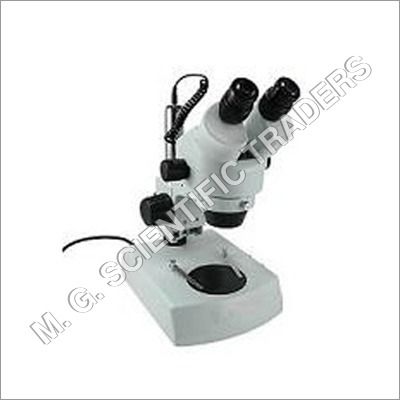
To meet ever-growing requirements of the clients, we are engaged in manufacturing and supplying an extensive range of Stereo Zoom Binocular Microscope. In research laboratories this type of microscope is highly used for low magnification observation of a sample. To design the microscope we use high quality materials, procured from the authentic vendors. We can make the Stereo Zoom Binocular Microscope available for the clients in different specifications as per their requirements.
Features:
Precision Engineering for Reliable ResultsBuilt with a robust metal structure and corrosion-resistant powder coating, this microscope offers lasting durability and stability. Its large, flat mechanical stage and anti-slip feet ensure secure operation in any laboratory environment, minimizing vibrations for sharp, accurate observations.
Flexible Viewing and ComfortFeaturing a 360 rotatable binocular head, inclined at 45, and adjustable interpupillary distance, users can observe samples from various angles with ease. Paired wide-field 10x eyepieces and adjustable stage plates enhance visual comfort during extended sessions, promoting efficiency and reducing strain.
Versatile Illumination and Sharp 3D ImagingThe integrated LED or halogen lighting supports both incident (top) and transmitted (bottom) illumination, accommodating diverse sample types and observation needs. Achromatic zoom objectives enable continuous magnification for clear, three-dimensional viewing in routine laboratory applications.
FAQ's of Stereo Zoom Binocular Microscope:
Q: How do I adjust the magnification on the Stereo Zoom Binocular Microscope?
A: Simply rotate the zoom control knob to switch between different magnification levels, ranging typically from 7x to 45x, utilizing the paired achromatic objectives and standard 10x eyepieces.
Q: What are the key benefits of using this microscope in laboratory settings?
A: This microscope offers ergonomic design, sharp 3D imagery, continuous zoom, a stable anti-slip base, and flexible viewing angles-all contributing to minimized user fatigue and greater observational accuracy during laboratory work.
Q: When should I replace the eyepieces or objectives?
A: Eyepieces and objectives should be replaced if you notice decreased image clarity, damage, or excessive wear. Spare components, including eyepieces, objectives, bulbs, and stage plates, are readily available for maintenance.
Q: Where should the microscope be placed for optimal performance?
A: For best results, place the microscope on a stable, flat laboratory bench, away from harsh vibrations or direct sunlight. The anti-slip feet enhance stability on most surfaces.
Q: What is the process for changing the stage plate?
A: To change the stage plate, gently lift the existing plate from the stage and replace it with either the interchangeable glass or black/white plate, depending on your specimen and contrast requirements.
Q: How is the microscope powered and what are the illumination options?
A: The microscope is powered by a standard 220V AC/50Hz supply or as specified. It features built-in LED or halogen lamps for both incident (top) and transmitted (bottom) illumination, enabling viewing of a range of specimen types.
Q: Can this microscope be used for digital imaging or recording?
A: This model is designed for visual observation and does not feature a digital output. For digital imaging, a separate camera attachment designed for microscopes would be required.











 Send Inquiry

 Send Inquiry
 Send SMS