Product Description
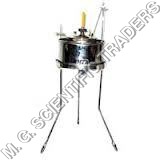
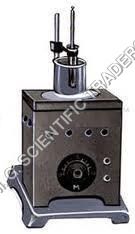
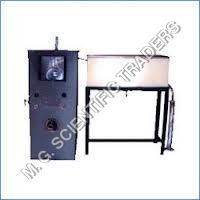
Backed by rich industrial experience, we are able to supply our clients a broad range of Engler Viscometer Apparatus. The offered apparatus is manufactured with the aid of sophisticated technology using high grade raw material procured from reliable vendors of the market. It is used to determine the viscosity of lubricating and fuel oils in accordance with continental emulsions. Clients can avail this Engler Viscometer Apparatus in various specifications as per their needs.
Features:
-
compact design
-
Durability
-
It consists of Stainless steel water bath having oil cup with double walled lid.
-
The bath is fitted with 500 watts heater.
-
It is supplied with wooden or ebonite valve to fit jet (without glass wares)
-
Can operate on 220 Volts AC mains.
-
The water bath with stirring device mounted on stand.
-
A thermometer clip to the water bath and the oil cup lid has a thermometer socket.
-
Engler Viscometer Gas Heated Modal Without burner.
-
Engler Viscometer Electric heated without any regulator control.
-
Engler Viscometer electric heated with copper coil type voltage varric.
-
Engler Viscometer electric heated with digital temperature controller cum indicator.
Precision Viscosity Testing for Petroleum ProductsDesigned for laboratory accuracy in compliance with IS 1448 (P:22) 1976, the Engler Viscometer Apparatus delivers reliable viscosity measurements for oils and related products. Its high-quality stainless steel construction and precise temperature control make it a dependable choice for research, industry, and quality assessments. The unit's ease of use and maintenance contribute to its popularity among laboratory professionals and industry experts alike.
Robust Construction and User-Friendly OperationCrafted from corrosion-resistant, polished stainless steel, this Engler Viscometer assures longevity and straightforward cleaning. The immersion heater and water bath ensure consistent temperature control, while an analog display provides clear readings. Its compact, bench-top format is ideal for space-constrained laboratories, offering a seamless blend of functionality and convenience for daily viscosity analyses.
FAQ's of Engler Viscometer Apparatus:
Q: How does the Engler Viscometer Apparatus operate for viscosity measurement?
A: The Engler Viscometer Apparatus functions by determining the flow time of a 200 ml oil sample through a standardized brass orifice at controlled temperatures. The ratio of this flow time to that of water at the same temperature provides the viscosity in Engler units.
Q: What are the main applications of this viscometer in a laboratory setting?
A: This apparatus is primarily used for the analysis and testing of petroleum products, enabling laboratories to ascertain viscosity-a critical parameter for quality control and research in the petroleum, lubricant, and chemical industries.
Q: When should the water bath be used during testing?
A: The water bath is used whenever temperature regulation is essential, ensuring precise temperature control from ambient up to 100C. This consistency is necessary to comply with IS 1448 (P:22) 1976 requirements and to achieve accurate viscosity readings.
Q: Where is the Engler Viscometer commonly installed, and what is its mounting type?
A: The Engler Viscometer is designed for bench-top installation, making it suitable for laboratory environments-whether academic, industrial, or research-based. Its compact footprint allows for easy placement on standard laboratory benches.
Q: What process should be followed for cleaning and maintaining the apparatus?
A: After each use, the oil cup and orifice should be thoroughly cleaned with an appropriate solvent to prevent residue buildup. Regular inspection of the immersion heater, water bath, and thermometer ensures consistent performance and prolongs equipment life.
Q: How does the apparatus benefit laboratory workflows?
A: By providing accurate and repeatable viscosity measurements, the Engler Viscometer enhances quality control, reduces erroneous readings, and streamlines the assessment process. Its corrosion-resistant and easy-to-clean design further decreases downtime between tests.











 Send Inquiry

 Send Inquiry
 Send SMS